
Online trainer profile — do you need your own website?
A WordPress site costs $50–150/month and 50h of work. A profile-based booking page handles 90% of the need in 10 minutes. When does each make sense.
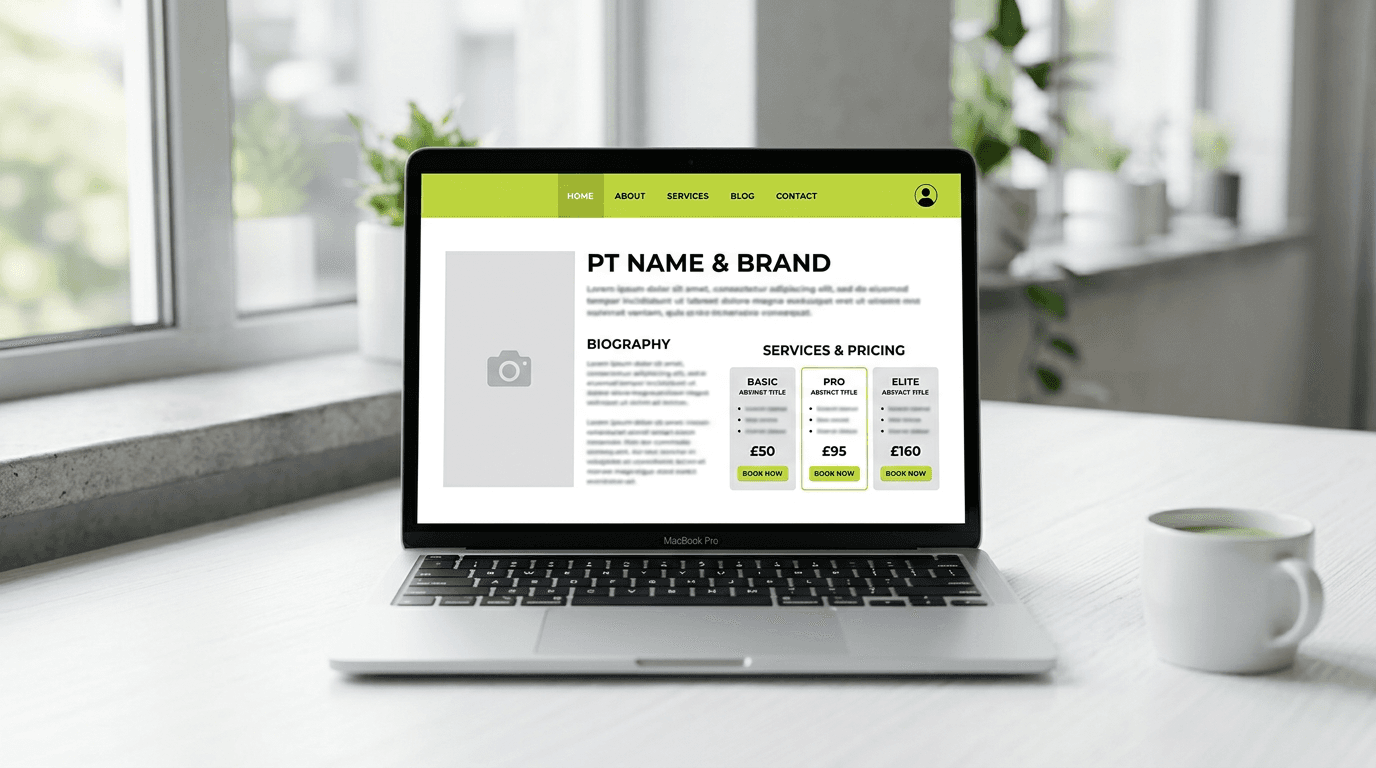
90% of trainers who "need a website" really need a profile page. A WordPress site costs $50–150/month, requires 30–50 hours of content work, and gets zero traffic in the first 6 months without SEO investment. A profile page (e.g. fit.expert/your-name) does the same thing in 10 minutes. Here's when each makes sense.
What's a profile page — and how it differs from a website
Custom website — your own domain (e.g. johntrainer.com), template choice, manual section layout, plugged-in booking system + payments + hosting + email + SSL + GDPR + Cookies. Full control, full responsibility.
Profile page — a page at a URL like fit.expert/your-name, where:
- Your photo + bio
- Service pricelist + packages
- Booking calendar with self-service
- Reviews / testimonials
- Gallery, FAQ, certifications (optional)
- SEO-optimized out of the box
Clients see exactly the same thing as on a custom website. The difference = the URL and maintenance cost.
What you actually need at the start
Before choosing, check what a personal trainer realistically needs:
- Clients find you on Google. Local SEO ("personal trainer [city]"), Google Business Profile, reviews.
- Clients see your offer. Photo, bio, pricelist, specialization.
- Clients can book. Calendar, booking system, online payment.
- Clients sense you're a pro. Aesthetic, reviews, certifications.
All four are covered by a profile page. None requires your own domain or CMS.
The real cost of each option
Custom WordPress site (realistic 2026 prices):
| Item | One-time | Monthly |
|---|---|---|
| Domain (.com) | $12/year | ~$1 |
| Hosting (decent host) | — | $10–40 |
| Premium theme | $80–200 | — |
| SSL | — | $0–10 |
| Plugins (bookings, payments, forms) | — | $20–80 |
| Business email | — | $6–15 |
| Backup | — | $5 |
| Total: | $100–300 | $40–150/m |
Plus time:
- Setup: 15–30h (theme, content, SEO basics)
- Monthly maintenance: 2–5h (updates, backups, fixes)
- SEO: if you seriously want traffic, 5–10h/month writing content
Profile page (Fit.Expert and similar):
| Item | One-time | Monthly |
|---|---|---|
| Full profile with everything | $0 | $0–15 |
| Custom domain (optional) | $12/year | — |
Plus time:
- Setup: 30–60 minutes
- Monthly maintenance: 0 (system updates itself)
SEO — who wins
This is where most trainers get it wrong: "I have a website = I'm on Google." No. Being on Google means:
- Domain authority (3–6 months of building)
- Content (10+ blog posts, 1500+ words each)
- External backlinks (months of outreach)
- Technical SEO (sitemap, JSON-LD, hreflang, speed)
A trainer-amateur who sets up a site "because everyone has one" gets 0 organic traffic and loses 6 months.
Profile page on Fit.Expert SEO out of the box:
- Domain authority from
fit.expert(the whole service indexed, your profile inherits authority) - JSON-LD Person schema on every profile
- Auto-populated meta tags (multiple locales)
- Global sitemap updated daily
- Page loads under 1.5s
- hreflang for clients from different countries
Real local ranking ("personal trainer [your city]") from a profile page vs a custom site with no SEO work: the profile wins, because it inherits platform authority.
When a custom website makes sense
Three scenarios where your own site is the right call:
-
You have a personal brand and 10 000+ Instagram followers. Your clients search "[your name]" on Google. A domain with your name as a brand wallet makes sense.
-
You sell digital products (e-books, online courses, nutrition templates). A store with your own domain builds bigger authority, allows your own pricing policy and marketing.
-
You have a $5 000/year budget and 30 hours/month for content marketing (blog, SEO, social). Then a custom site with good SEO can become your main acquisition channel in 12 months.
If you don't meet any of these conditions — a profile page is the 10× better decision.
When a profile page is NOT enough
Realistically only 3 situations:
- Corporate contracts (e.g. a trainer who signs HR deals for employee packages) — they want to see a "real company" with a corporate domain.
- Business you want to sell. A profile on a platform belongs to you, but the "brand" built around it is less sellable than a domain with an email list.
- Building content authority (blog, YouTube) and needing full technical flexibility.
What you get on a Fit.Expert profile
Concretely, in 10 minutes:
- Hero section: photo + name + tagline ("Sports prep coach, NYC")
- About: bio + certification list + specialization
- Pricelist: all services with prices (single session, packages, online consults)
- Calendar: client sees open slots 4 weeks out, clicks, books, pays
- Reviews: automatic review collection after sessions
- Gallery: photos (gym, clients, transformations — with consent)
- FAQ: common questions (payment, cancellations, what to expect)
- CTA: strong "Book your first session" button top and bottom
SEO:
meta titleauto-populated ("[Name] — Personal Trainer [City] | Fit.Expert")meta descriptionfrom your bio- JSON-LD Person schema
- OG image for shares
- Local geolocation (clients search "near me")
What's next
Check Personal trainer marketing — where to find clients in 2026 — learn how to drive traffic to your profile. If you don't have a booking system yet, read Online booking system for trainers.
You can set up a profile on Fit.Expert in 10 minutes: photo, bio, pricelist, calendar, link. Clients see a ready page at fit.expert/your-name. Free account.